The Complete Guide to TV and picture mounting in Anchorage
Mounting a TV or hanging pictures on your walls sounds straightforward until you actually start drilling holes. The difference between a professional installation and a DIY disaster often comes down to understanding your walls, choosing the right hardware, and knowing where to place your mount for optimal viewing and safety. Whether you're upgrading your entertainment setup, creating a gallery wall, or finally hanging that family portrait you've been leaning against the wall for months, proper mounting matters. In Anchorage's unique climate and building conditions, getting it right the first time protects your investment and keeps your family safe. This guide covers everything you need to know about TV and picture mounting, plus why hiring a professional makes sense for many homeowners.
Understanding Your Walls: The Foundation of Proper TV and picture mounting in Anchorage
Before you hang anything, you need to know what's behind your drywall. Anchorage homes vary widely in construction, from older homes with plaster walls to newer builds with standard drywall. The wall type determines which fasteners and techniques work best.
Most modern Anchorage homes have drywall over wooden studs. This is actually ideal for mounting because studs provide solid anchor points. However, studs are typically spaced 16 inches apart (sometimes 24 inches), which means your TV mount or picture hook might not align perfectly with a stud.
If you're mounting directly into studs, you have the most secure installation possible. For mounting between studs, you'll need appropriate anchors like toggle bolts or heavy-duty drywall anchors. Never hang a TV using only drywall anchors without stud support. The weight is simply too much, and failure means a damaged TV and potential injury.
Plaster walls, found in some older Anchorage homes, require different techniques. Plaster is more brittle than drywall and demands gentler drilling and sometimes specialized anchors designed for plaster.
Choosing the Right Mount Type for Your Space
TV mounts come in three basic styles, each with different considerations.
Fixed mounts hold your TV flat against the wall. They offer a clean, modern look and are the most affordable option. The trade-off is that you cannot adjust the viewing angle. Choose a fixed mount if your TV will be viewed straight-on from your seating area.
Tilting mounts allow you to angle your TV up or down. This is useful if your TV is mounted higher than eye level or if you have seating at different heights. Tilting mounts cost slightly more than fixed mounts but add flexibility without taking up much additional space.
Full-motion (articulating) mounts extend from the wall and swivel in multiple directions. They're ideal if you want to watch TV from different rooms or angles, or if your furniture arrangement might change. These mounts cost more and require more wall space, but they maximize viewing comfort.
For picture frames and artwork, you have even more options. Simple picture hooks work well for lightweight items under 10 pounds. For heavier pieces or if you want a more finished look, consider using mounting rails or French cleats that distribute weight across studs.
Installation Methods and Best Practices
The installation process differs based on what you're mounting and where.
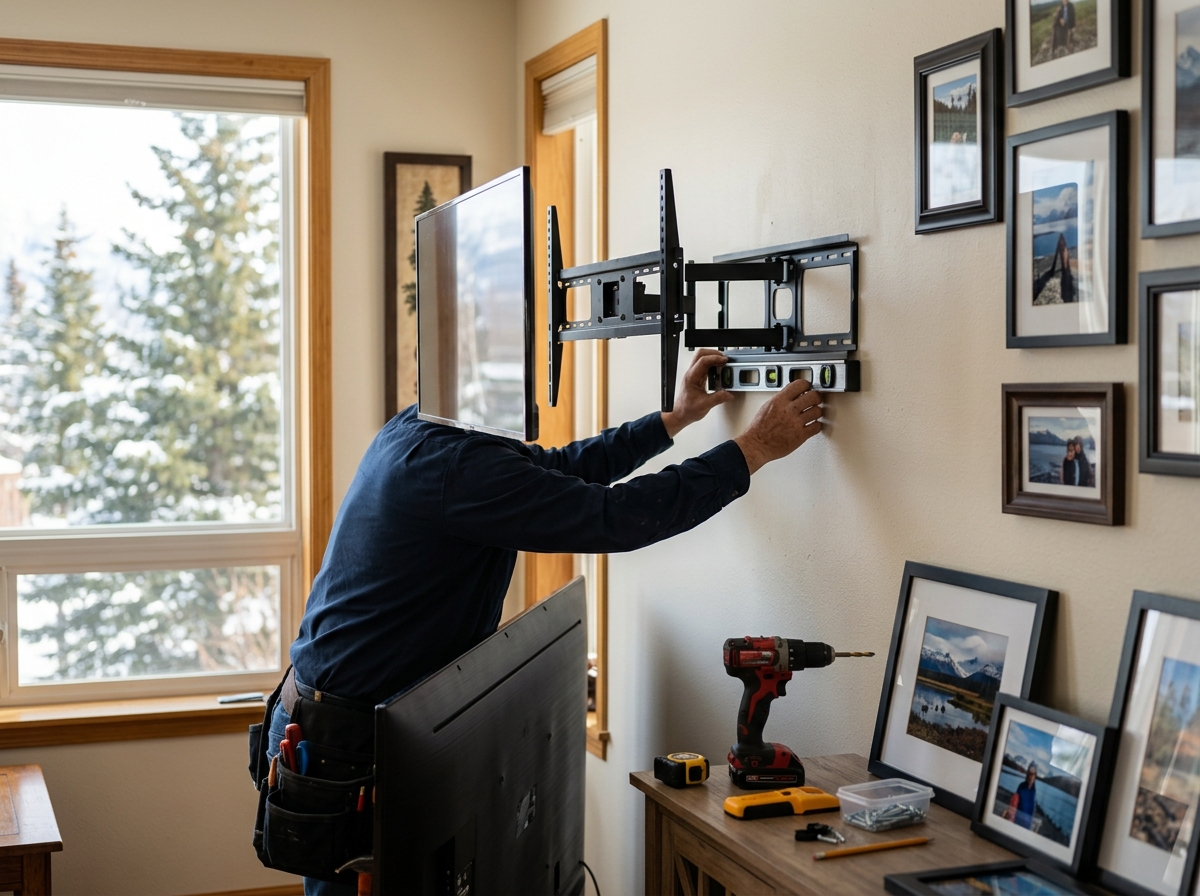
For TV mounting, start by finding studs using a stud finder. Mark the stud locations with a pencil. If your mount bracket aligns with studs, you're in the best position. Mark your mounting height (typically 60 inches to the center of the screen is comfortable, though this varies by room size and seating distance). Use a level to ensure your marks are perfectly horizontal.
Drill pilot holes first, then install the appropriate fasteners. If you're into studs, wood screws work well. If you're between studs, use the toggle bolts or anchors that came with your mount. Never skip this step or use undersized fasteners.
For picture mounting, measure twice and mark lightly with pencil before making any holes. A level ensures your frame hangs straight. Group multiple pictures first on the floor to plan your layout, then transfer those measurements to the wall. This prevents the frustration of multiple nail holes in wrong locations.
Cable management often gets overlooked but makes a huge difference in the final appearance. Run cables down the back of the TV or through wall channels to keep everything clean and organized.
Common Mounting Questions Answered
How high should I mount my TV? The general rule is to position the center of the screen at or slightly below eye level when seated. For a typical living room with seating 8 to 10 feet away, this usually means mounting the center around 60 inches from the floor. Measure your specific setup before drilling any holes.
Can I mount a TV on any wall? Not really. Avoid exterior walls in Anchorage if possible, as temperature fluctuations can affect the TV's performance. Also avoid walls with plumbing or electrical lines running through them. A professional can help identify the safest location.
What about heat buildup? TVs generate heat, and that heat needs somewhere to go. Allow at least 4 inches of clearance above the TV and make sure nothing blocks airflow around the sides. This prevents overheating and extends your TV's lifespan.
How much weight can a wall support? Standard drywall with studs can support significant weight when mounted properly into studs. Most residential TV mounts are designed for TVs up to 80 pounds or more. Always check your specific mount's weight rating and your TV's weight.
Is professional installation worth the cost? For most homeowners, yes. Professionals have stud finders, levels, and the right fasteners on hand. They understand how to route cables properly and can spot potential issues before they become problems. The cost of installation is cheap insurance against a damaged TV or safety hazard.
Why TC Home Services is Your Anchorage TV and picture mounting Partner
TC Home Services handles TV and picture mounting with the same professionalism we bring to every project. We understand Anchorage homes and local building conditions. We arrive with the right tools, including reliable stud finders and levels that ensure precision. We take time to understand your viewing preferences and room layout before making any holes.
Our team handles cable management as part of the installation, giving you a clean, professional result. We can also coordinate mounting with other services like drywall repair if needed to prepare your wall properly.
Whether you're mounting a single large TV or creating an entire gallery wall of family photos, we approach each project with care and attention to detail. We're based right here in Anchorage and understand the specific challenges our local climate and home construction present.
Proper TV and picture mounting combines practical knowledge about walls and fasteners with attention to detail and safety. While it might seem simple, the difference between a professional installation and a problematic one often isn't visible until something goes wrong. Taking time to understand your walls, choosing the right mount type, and following best practices ensures your TV or artwork stays securely in place for years to come. If you'd rather leave this to the professionals, TC Home Services is ready to help. Contact us for a consultation about your mounting project, and let's get your walls looking great. ## ABOUT THIS CUSTOMER TC Home Services, based in Anchorage, Alaska, is a full-service handyman company offering services including General home repairs, Drywall repair, Insulation, Carpentry, Decks and fences, Small remodels, Soffit repair, Tile work, Painting, Screen repair and lanai re-screening, TV and picture mounting, and Home watch services. Troy and his team are committed to quality workmanship and customer satisfaction.